
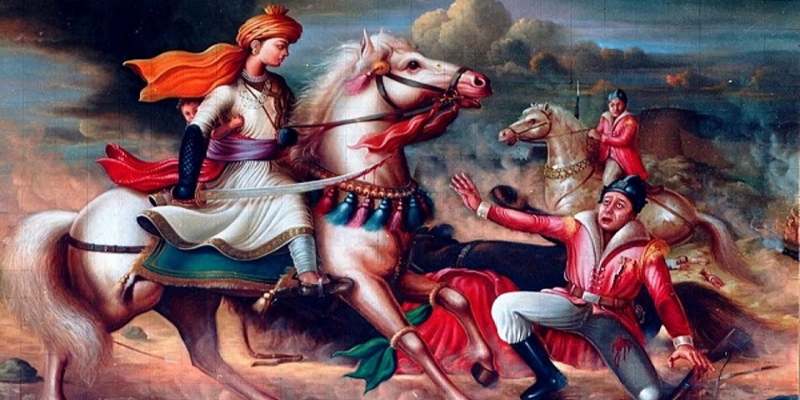
Rani Lakshmi Bai, the name evokes images of courage, defiance, and unwavering patriotism. In the annals of Indian history, she shines as a radiant star, her legend immortalized for her valiant fight against the British East India Company in the 1857 uprising. Weaving through her life, from a spirited childhood to her heroic martyrdom, reveals a tale of extraordinary bravery, strategic brilliance, and unwavering love for her kingdom.
Roots Nourished in Valor: A Spirited Childhood
Born as Manikarnika Tambe in 1828, in the holy city of Varanasi, her childhood was far from ordinary. Nicknamed Manu, she exhibited a vibrant spirit and an aptitude for swordsmanship and horse riding, defying societal norms that confined girls to domesticity. Her upbringing under the Peshwa Baji Rao II exposed her to the political landscape, fostering a deep sense of loyalty towards her homeland. At a tender age of 14, she married Raja Gangadhar Rao of Jhansi, adopting the name Lakshmi Bai and embracing the responsibilities of queenhood.
Unyielding Queen: Defying the Doctrine of Lapse
Tragedy struck in 1853 with the Raja’s untimely demise. With no male heir, the British invoked the Doctrine of Lapse, an annexation policy targeting childless kingdoms. Lakshmi Bai, refusing to surrender her beloved Jhansi, adopted Damodar Rao, a five-year-old, as her son and heir, becoming the regent. This ignited a fire within her, vowing to protect her kingdom and its people from British subjugation.
Forging Alliances, Igniting the Rebellion:
Undeterred by threats, Lakshmi Bai actively engaged in diplomacy, forging alliances with neighboring rulers who shared her anti-colonial sentiments. When the Sepoy Mutiny erupted in 1857, she saw an opportunity to strike back. Jhansi became a beacon of resistance, transforming into a fortified fortress under her masterful leadership. Lakshmi Bai, astride her white horse, her fiery spirit inspiring her brave army, repelled initial British attacks, inflicting heavy losses.
The Roar of a Tigress: The Siege of Jhansi
In early 1858, faced with a massive British force led by General Hugh Rose, Lakshmi Bai refused to surrender. The ensuing siege of Jhansi witnessed her valiant defense. Utilizing guerilla tactics and exploiting strategic weaknesses, she inflicted heavy casualties on the enemy, earning the epithet “The Tigress of Jhansi.” However, after weeks of fierce resistance, Jhansi fell, leaving Lakshmi Bai heartbroken but not defeated.
Unconquered Spirit: The Final Ride and Legacy
Undeterred by the fall of Jhansi, Lakshmi Bai, along with her adopted son and a band of loyal soldiers, escaped the city. She joined forces with other rebel leaders, engaging in guerilla warfare against the British. In June 1858, during a battle near Gwalior, at the young age of 29, she fell, fighting valiantly. Even in death, her legend lived on, inspiring generations of freedom fighters, including Mahatma Gandhi, to challenge British rule.
Beyond the Battlefield: A Woman of Compassion
Rani Lakshmi Bai wasn’t just a fierce warrior; she was also a compassionate ruler. She implemented progressive reforms, improving the lives of her subjects. She encouraged education for women, established a women’s army corps, and earned the respect and love of her people.
Her Legacy: A Symbol of Resistance and Inspiration
Rani Lakshmi Bai’s life and sacrifice transcend the pages of history. She embodies the spirit of resistance against oppression and the unwavering fight for freedom. Her courage, leadership, and strategic brilliance continue to inspire countless individuals, particularly women, to break barriers and fight for their rights. Monuments, poems, films, and even a regiment in the Indian Army bear her name, ensuring her legacy lives on, a testament to the power of an indomitable spirit.
Critics and Controversies Surrounding Rani Lakshmi Bai: Examining Different Perspectives
While Rani Lakshmi Bai is widely revered as a hero of the Indian independence movement, historical figures, especially those involved in armed conflict, rarely escape criticism. It’s important to acknowledge and explore diverse perspectives to gain a fuller understanding of her legacy. Here are some key points regarding critiques surrounding Rani Lakshmi Bai:
The Adoption of Damodar Rao:
- Criticism: Some historians question the legality of the adoption, suggesting it was primarily a political move to retain Jhansi’s independence. They argue it deprived Damodar Rao, a young boy, of his rightful inheritance and used him as a pawn in the power struggle.
- Defense: Supporters argue that Lakshmi Bai followed prevailing Hindu customs, where adoption ensured lineage continuity and prevented the kingdom’s annexation. They emphasize her genuine love and care for Damodar Rao, citing her efforts to secure his future even after her death.
Allegations of Cruelty:
- Criticism: Some British accounts accused Lakshmi Bai of ordering the massacre of British captives after the fall of Jhansi. These claims haven’t been conclusively proven and are considered unreliable by many historians due to potential bias and propaganda.
- Defense: Supporters argue that such accusations were fabricated to demonize Lakshmi Bai and justify British actions. They highlight her known compassion and leadership qualities, making such brutality unlikely.
Effectiveness of Her Military Strategy:
- Criticism: Some military analysts suggest that Lakshmi Bai’s guerilla tactics, while initially successful, lacked long-term strategy and ultimately contributed to the fall of Jhansi. They argue that a more conventional approach might have provided better defense.
- Defense: Supporters counter that Lakshmi Bai’s unconventional tactics were a necessary adaptation to the overwhelming British force. They emphasize her success in inflicting heavy losses and delaying the fall of Jhansi, demonstrating her courage and resourcefulness.
Portrayal in Popular Culture:
- Criticism: Some argue that popular portrayals of Rani Lakshmi Bai tend to romanticize her life and actions, focusing solely on her bravery and neglecting the complexities of the historical context. This, they argue, can create a one-dimensional image that doesn’t do justice to her multifaceted personality.
- Defense: Supporters believe that popular portrayals, while fictionalized, play a crucial role in keeping her memory alive and inspiring future generations to fight for justice and freedom. They argue that the emotional connection created by these portrayals outweighs historical inaccuracies.

Legacy and National Identity:
- Criticism: Some scholars argue that the elevation of Rani Lakshmi Bai as a national hero serves a specific political agenda, promoting a particular narrative of Hindu nationalism. They caution against using historical figures solely as symbols without acknowledging the full spectrum of their actions and beliefs.
- Defense: Supporters believe that Rani Lakshmi Bai’s fight against colonialism transcends specific ideologies and represents a universal struggle for freedom. They argue that her legacy should be celebrated for its unifying power and inspiration, regardless of political interpretations.
Conclusion:
Examining criticisms alongside praise allows for a more nuanced understanding of Rani Lakshmi Bai’s life and legacy. Recognizing diverse perspectives avoids perpetuating a one-sided narrative and encourages critical discussions about historical figures and their impact. Ultimately, Rani Lakshmi Bai remains a powerful symbol of courage, defiance, and the fight for freedom, inspiring generations to come.