
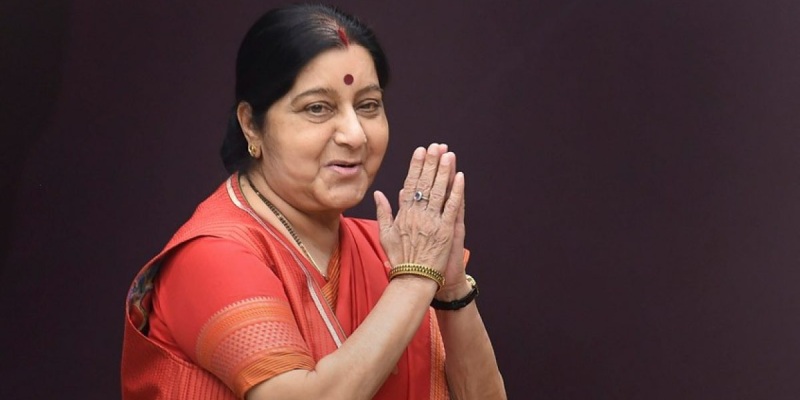
Sushma Swaraj, a name synonymous with grace, grit, and diplomacy, etched her legacy as one of India’s most distinguished politicians and foreign ministers. Her journey, spanning across decades and continents, was a testament to her unwavering commitment to public service, her sharp intellect, and her ability to navigate complex international relations with finesse. Let’s delve into the remarkable life and career of Sushma Swaraj, exploring her early life, education, political trajectory, personal life, literary pursuits, and the impact she left behind.
Early Life and Education:
Born on February 14, 1952, in Haryana, Sushma Swaraj’s early life was steeped in academia. Her father, a lawyer and RSS swayamsevak, instilled in her a strong sense of social justice and national pride. She excelled in her studies, graduating with honors in Law from Chandigarh’s Panjab University. During this time, she actively participated in student politics, showcasing her leadership qualities and oratorical skills.
Political Career:
Sushma Swaraj’s political career began in the 1970s, joining the Bharatiya Janata Party (BJP) upon its formation. She rose through the ranks, serving as a member of the Haryana Legislative Assembly (1977-1990), the Lok Sabha (1996-2019), and the Rajya Sabha (1990-1996). Her sharp wit, strategic thinking, and ability to connect with the masses made her a formidable political force.
Minister of Information and Broadcasting (1996-1998): Abolishing prior censorship for Doordarshan, the state-owned broadcaster, marked a crucial reform during her tenure.
Minister of Labour and Employment (1998-2000): Her pro-worker policies included the Minimum Wages Act amendment and the National Child Labour Policy, highlighting her concern for social welfare.
Chief Minister of Delhi (2001-2003): As Delhi’s first female Chief Minister, she tackled water scarcity and infrastructural challenges with efficiency, leaving a lasting impact on the city.
Leader of the Opposition in the Lok Sabha (2009-2014): Leading the opposition effectively, she held the government accountable and articulated the BJP’s vision with clarity and conviction.
The Pinnacle: Minister of External Affairs (2014-2019):
Sushma Swaraj’s most defining chapter unfolded as India’s Minister of External Affairs. Her decisive leadership, astute diplomacy, and compassionate approach earned her international respect. Key achievements include:
Crisis Management: Evacuating Indian citizens from conflict zones like Yemen and Ukraine became a hallmark of her tenure. Her swift action during the Doklam standoff and the surgical strikes showcased her resolve on security matters.
Innovative Diplomacy: Initiatives like “Passport Seva” and “Twitter Diplomacy,” where she directly addressed citizens’ concerns, redefined accessibility and responsiveness in foreign policy.
Strengthening Relations: From forging closer ties with Russia and Japan to navigating complex partnerships with the US and China, she played a pivotal role in shaping India’s global standing.
Married Life and Child:
Sushma Swaraj’s personal life was marked by dedication to her family. She married Swaraj Kaushal, a lawyer, in 1975, and they had a daughter, Bansuri Swaraj, who became a Supreme Court lawyer. Although her political career demanded immense time and energy, Sushma Swaraj prioritized family, cherishing moments with her loved ones.
Poetry Career:
Beyond politics, Sushma Swaraj harbored a passion for poetry. She penned verses in Hindi and Haryanvi, reflecting on diverse themes like love, patriotism, and social issues. Her poems resonated with readers for their simplicity, depth, and emotional honesty.
FAQs:
- What were Sushma Swaraj’s most significant achievements?
- As Foreign Minister, she strengthened India’s foreign relations, handled crises effectively, and introduced innovative diplomatic initiatives. Her evacuation efforts and decisive actions on the Doklam issue stand out.
- What made Sushma Swaraj a popular leader?
- Her accessibility, compassion, and ability to connect with people from all walks of life endeared her to the masses. Her wit, eloquence, and strong work ethic further cemented her popularity.
- What were her biggest challenges?
- As a woman in politics, she faced gender bias and stereotypes, which she countered with grace and determination. Balancing her demanding career with personal life also presented challenges.
Critics and Controversies:
Sushma Swaraj’s political career was not without criticism. Some questioned her handling of certain foreign policy issues, and her association with the BJP, which has faced accusations of right-wing nationalism. However, her supporters argue that her achievements outweigh any critiques, and her legacy transcends political affiliations.